

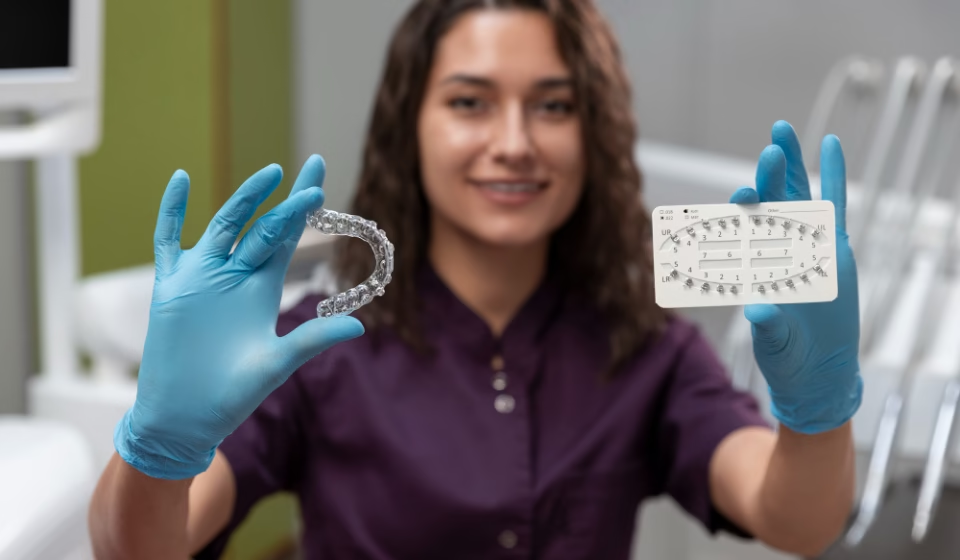
A confident smile is more than just an aesthetic feature. It plays a vital role in oral health, self-esteem, and overall well-being. With advancements in orthodontic technology, achieving straight teeth has become more accessible and convenient than ever before. As a result, many individuals are exploring options like Invisalign treatment in Coral Gables alongside traditional braces.
Both treatments are designed to correct misaligned teeth and improve bite issues, but they differ significantly in design, comfort, and lifestyle impact. Understanding these differences is essential before making a decision. A detailed comparison of Invisalign and braces can help determine which option best aligns with your needs.
What is Invisalign, and how does it work?
Invisalign is a modern treatment that uses clear, removable aligners to gradually shift teeth into their desired position. These aligners are custom made using advanced digital technology and are designed to fit snugly over your teeth. The treatment process involves wearing a series of aligners, each slightly adjusted to move teeth step by step. One of the biggest advantages of Invisalign is its nearly invisible appearance. This makes it especially appealing to individuals who want a discreet way to straighten their teeth without drawing attention.What are braces, and how do they work?
Braces are a traditional and widely used solution that consist of brackets attached to the teeth and connected by wires. These components work together to apply consistent pressure, gradually moving teeth into proper alignment. Over time, adjustments are made to the wires to ensure continued progress. Braces remain fixed on the teeth throughout the treatment, allowing them to work continuously without requiring patient intervention. Despite advancements in design, they are still more noticeable compared to clear aligners.Key differences between Invisalign and braces
Appearance and aesthetics
One of the most noticeable differences between Invisalign and braces is their appearance. Invisalign aligners are clear and virtually invisible, making them a preferred choice for those concerned about aesthetics.
Braces, on the other hand, are more noticeable due to the presence of brackets and wires, making them less discreet compared to clear aligner options like Invisalign.
Comfort and convenience
Invisalign aligners are made of smooth plastic, which reduces the chances of irritation to the gums and cheeks. They are also removable, allowing you to eat, brush, and floss without restrictions.
Braces can cause some discomfort, especially after adjustments. Food restrictions are also common, as certain items can damage the brackets or wires.
Effectiveness and treatment scope
Both Invisalign and traditional braces are effective solutions for correcting misalignment and bite issues, but they differ in approach and overall experience. Braces have long been used to treat a wide range of cases, including more complex orthodontic concerns, due to their fixed structure and continuous pressure.
However, advancements in Invisalign technology have significantly expanded its capabilities, allowing it to address not only mild to moderate issues but also many complex cases. Invisalign uses a series of custom-made clear aligners to gradually shift teeth into place, offering a more precise and comfortable treatment process.
Treatment duration
The length of treatment varies depending on the severity of the condition. Invisalign typically takes between twelve and eighteen months for mild cases. Braces may take longer, especially for more complex issues, sometimes extending beyond two years.
Consistency plays a major role in Invisalign treatment success. Since aligners are removable, results depend heavily on how diligently they are worn.
Maintenance and oral hygiene
Maintaining oral hygiene is generally easier with Invisalign. Since the aligners can be removed, brushing and flossing can be done normally.
Braces require more effort to clean around brackets and wires. Special tools such as interdental brushes may be needed to ensure proper hygiene and prevent plaque buildup.
Which option is right for you?
Choosing between Invisalign and braces depends on multiple factors. If you prioritize aesthetics and convenience, Invisalign may be the better choice. It is ideal for individuals who are committed to wearing aligners consistently and maintaining proper care. Braces may be the preferred option for those with complex dental issues or for individuals who want a treatment that does not rely on daily compliance. They provide reliable results regardless of lifestyle habits. Ultimately, the best choice depends on your specific dental needs, lifestyle, and personal preferences.Why choose Forma Dental for Invisalign treatment?
Choosing the right provider plays a crucial role in achieving successful and satisfying orthodontic results. At Forma Dental in Coral Gables, every Invisalign treatment is carefully planned to match individual dental needs, ensuring a personalized and effective approach to teeth straightening. With a strong focus on advanced technology and precision, our team delivers customized aligner solutions designed for comfort, accuracy, and optimal outcomes. From the initial consultation to the final results, you receive consistent guidance and support, making the entire process smooth and stress-free.Frequently asked questions
Is Invisalign better than braces?
Invisalign is often preferred for its discreet appearance and convenience, while braces may be more suitable for certain complex cases. The best option depends on individual dental needs and lifestyle preferences.
Are Invisalign aligners comfortable to wear?
Invisalign aligners are made from smooth plastic, which helps reduce irritation to the gums and cheeks compared to traditional braces.
Do Invisalign aligners need to be worn all day?
For optimal results, aligners should be worn for 20 to 22 hours per day, only being removed for eating, drinking, and oral hygiene routines.
Is oral hygiene easier with Invisalign or braces?
Oral hygiene is generally easier with Invisalign since the aligners can be removed, allowing for normal brushing and flossing.
How to choose between Invisalign and braces?
The decision depends on factors such as the complexity of the case, lifestyle preferences, comfort, and aesthetic goals. A professional consultation helps determine the most suitable option.
